CONTRAART / Projects / Sentimental (up)Load
02.Sentimental (up)LoadSentimentalno (u)čita(va)nje
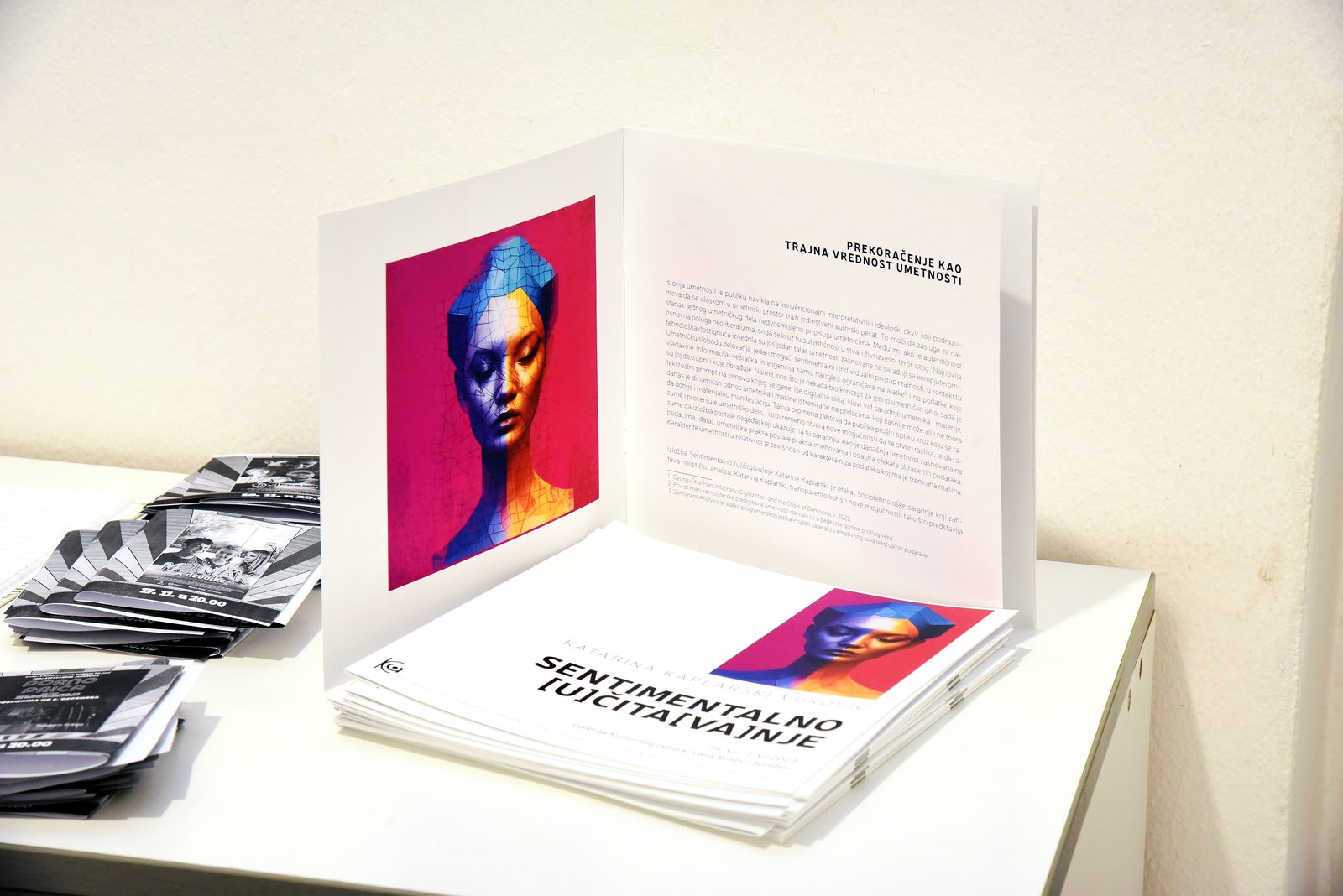
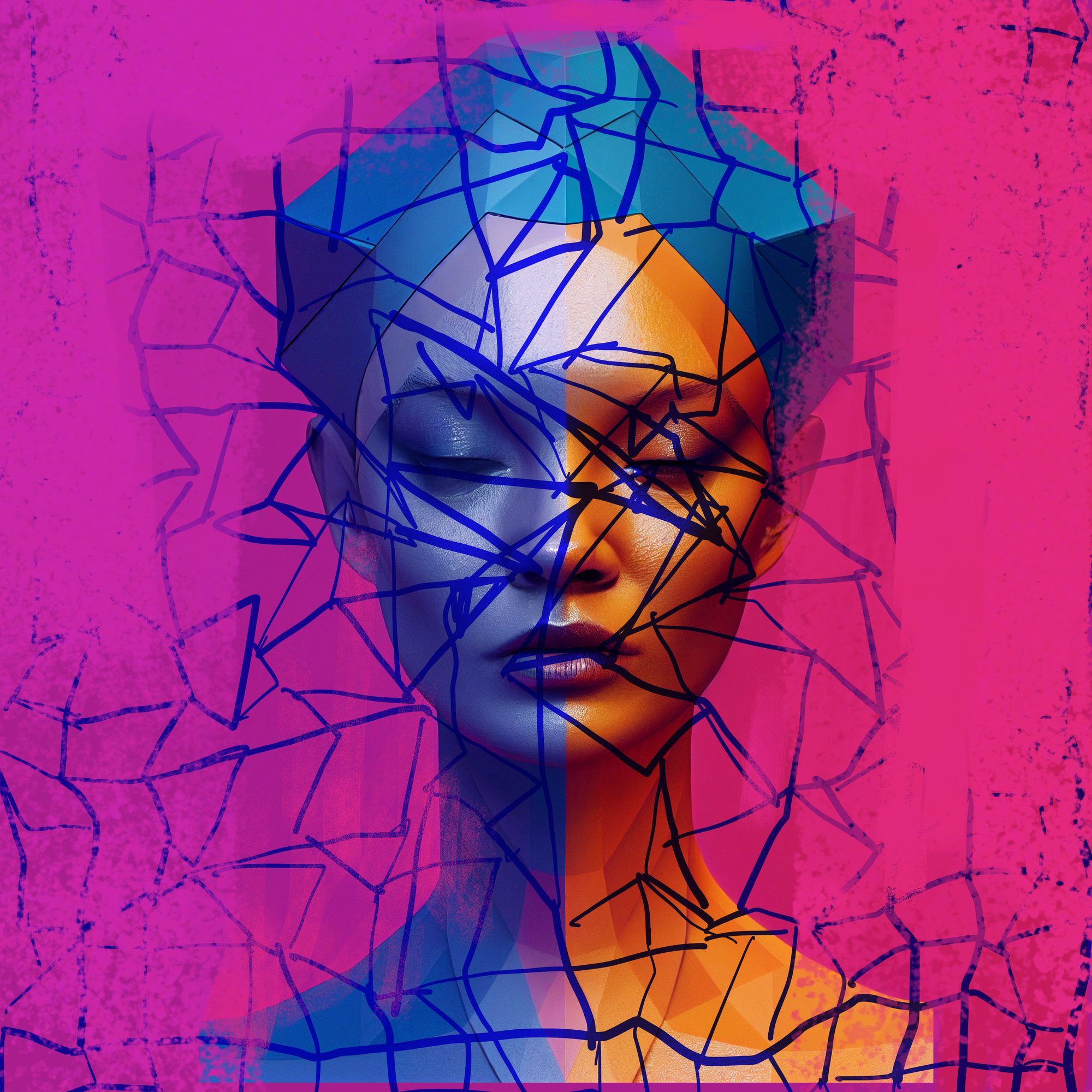
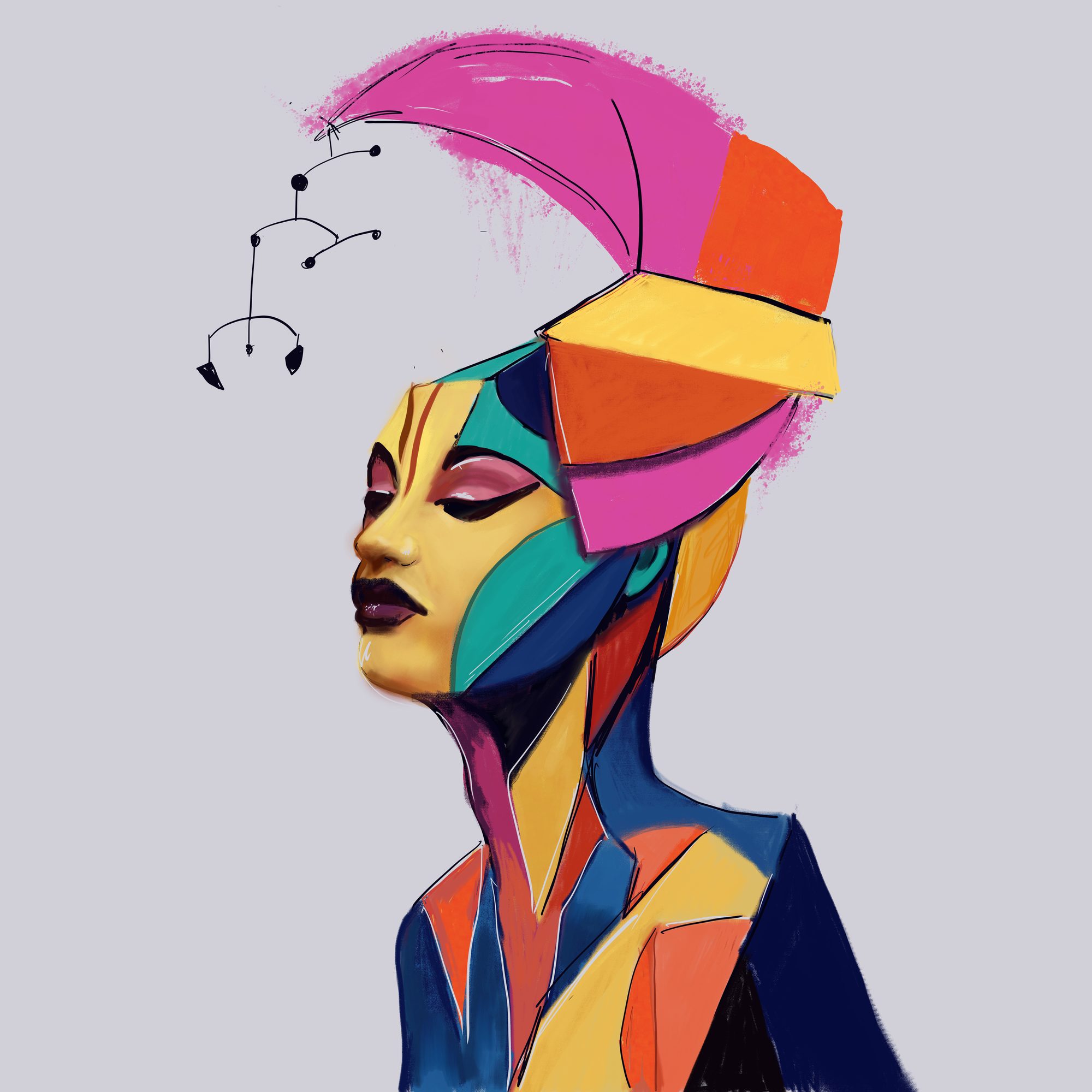
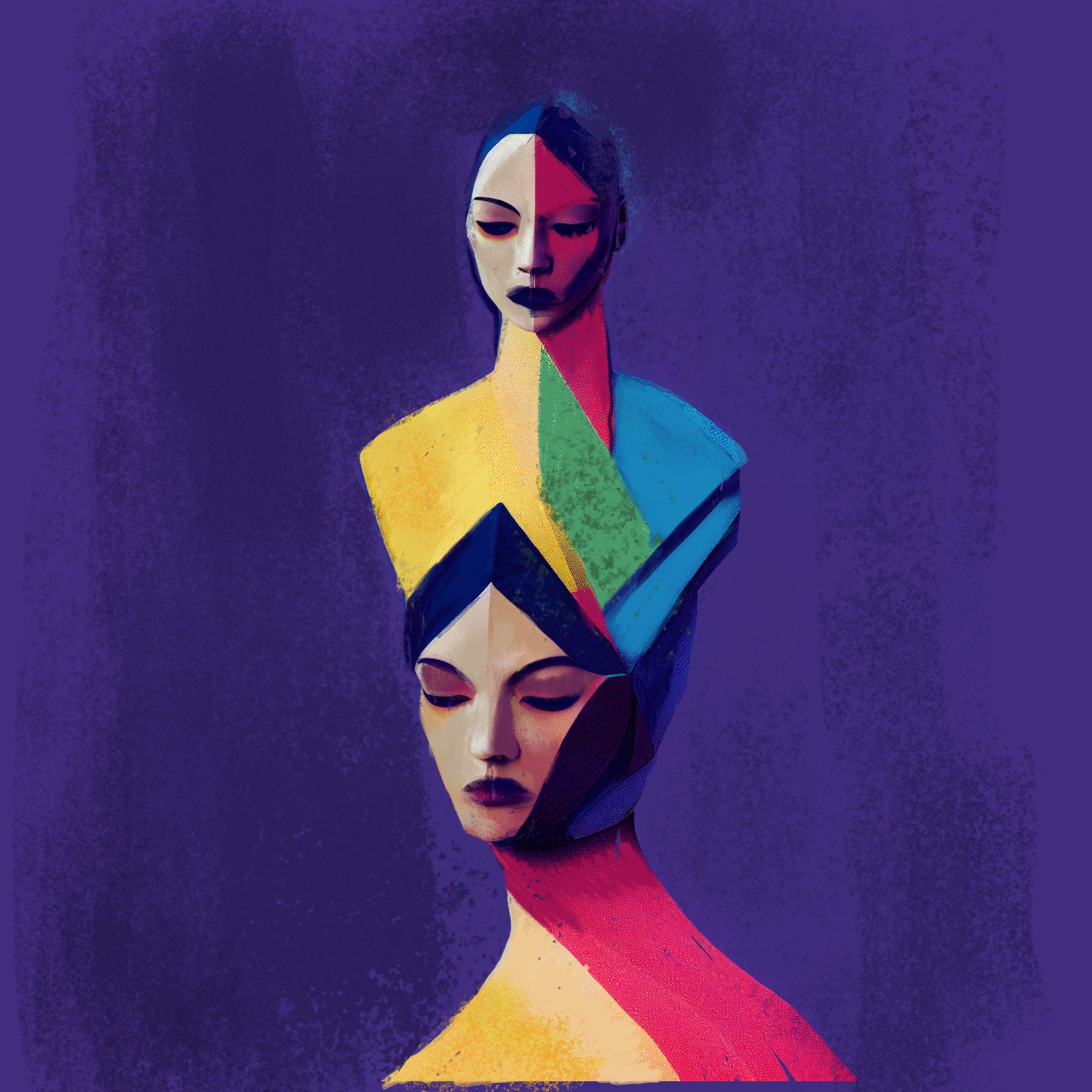
Sentimental (up)Load starts with a sentence typed to a machine. Katarina Kaplarski Vuković wrote prompts for the AI image generator Midjourney, printed what it returned, drew over the faces on the iPad and then took them onto canvas. Four of them became homages, to Georg Nees, Alexander Calder, René Magritte and Joseph Beuys.
Generated by the machine, drawn over by hand, painted on canvas.On the process
About the work
The Serbian title, Sentimentalno (u)čita(va)nje, folds two words into one: čitanje, reading, and učitavanje, loading. The exhibition is about what a person reads into an image and what a machine loads into it, and about the moment when the two meet.
In the catalogue, the curator and critic Maja Ćirić read the show as a collaboration between artist and technology. When an image is generated from a prompt by a machine trained on data, the artist’s work moves towards naming and choosing, and authorship becomes something shared.
During the exhibition Katarina also led a VR workshop in the gallery, and the show opened as a virtual gallery that visitors could walk through as avatars, in a headset or on their phones.
- Title
- Sentimental (up)Load (Sentimentalno (u)čita(va)nje)
- Artist
- Katarina Kaplarski Vuković (CONTRAART)
- Year
- 2022–2023
- Medium
- Digital prints generated with Midjourney, drawings over them on the iPad printed on canvas, acrylic on canvas, virtual exhibition
- Works
- Digital Knitting, Calder, This Is Not a Magritte, Please Explain This: acrylic paintings and prints on canvas, 100 × 100 cm and 50 × 50 cm. Four Midjourney prints, 40 × 50 cm, November 2022, all titled with the prompt.
- Exhibited
- Solo exhibition, Gallery of the Cultural Centre “Laza Kostić”, Sombor, 14 November – 1 December 2023, with a VR workshop and a virtual gallery.
Midjourney · iPad · acrylic on canvas
Four homages
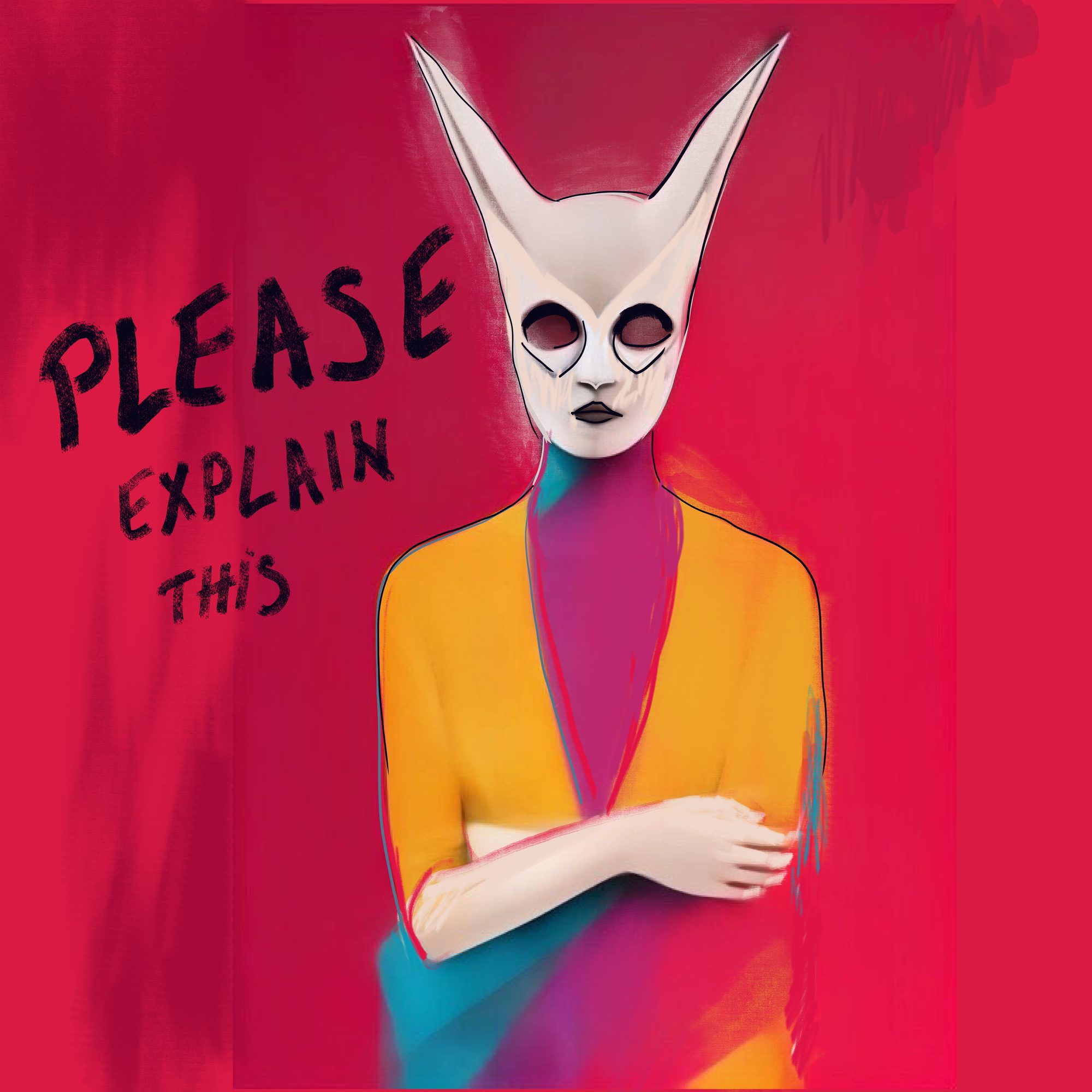
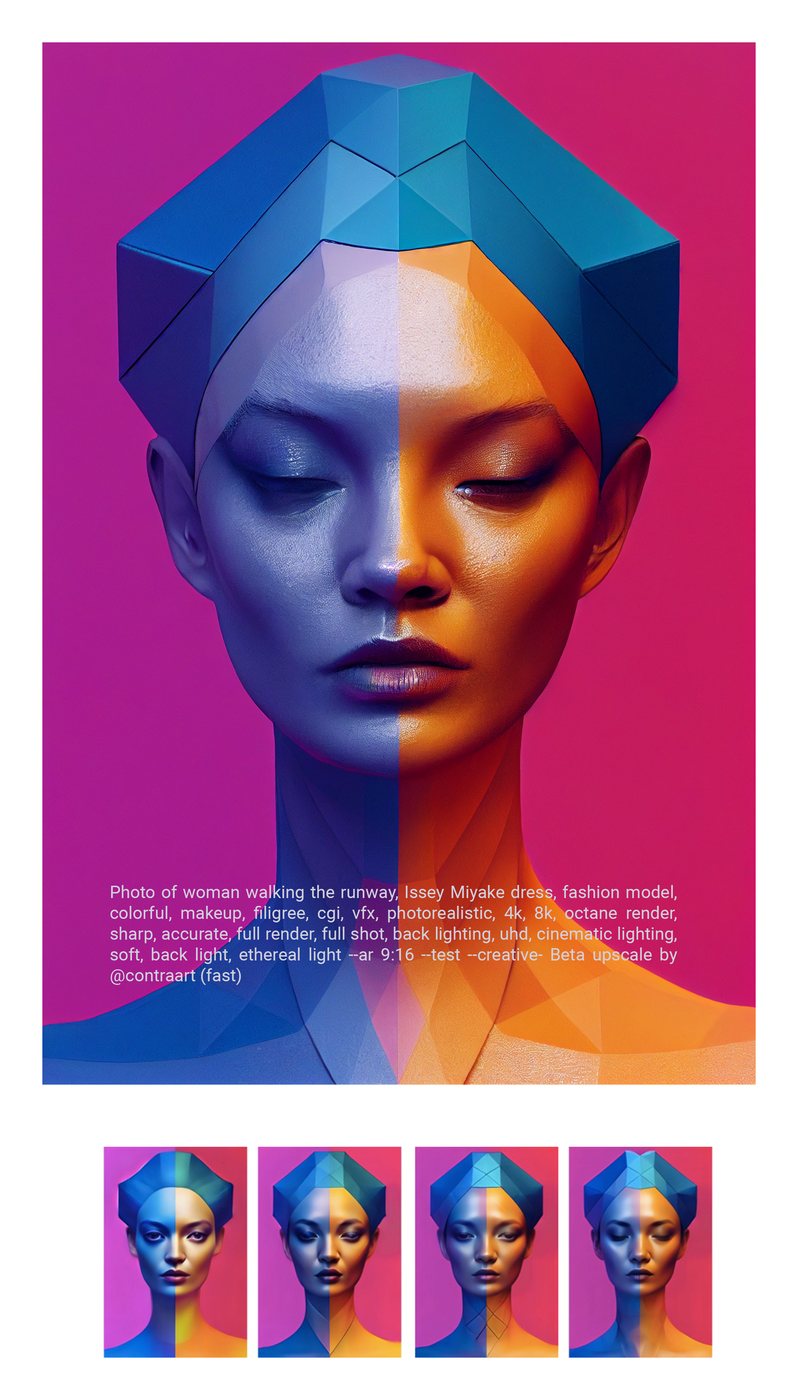
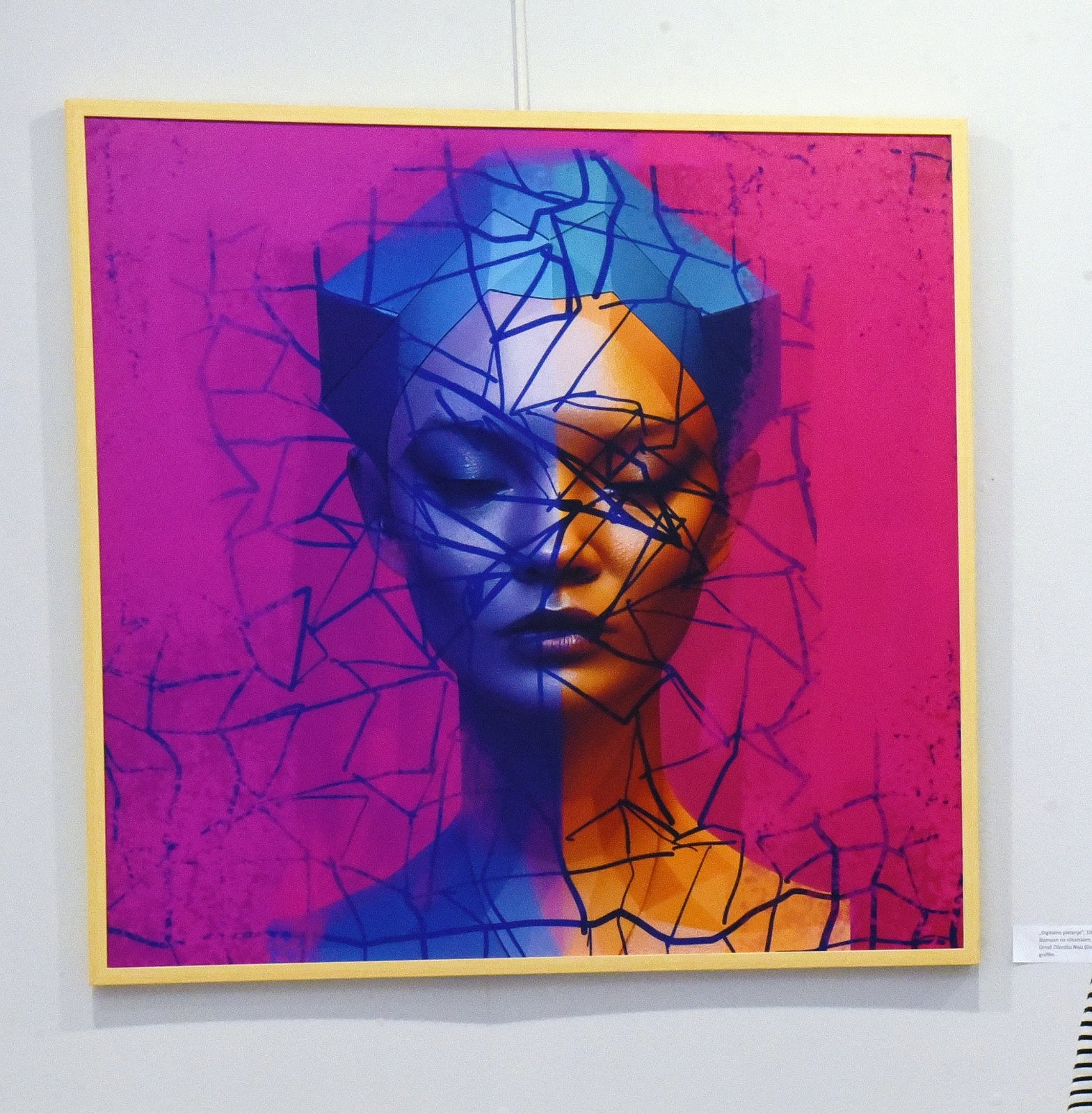
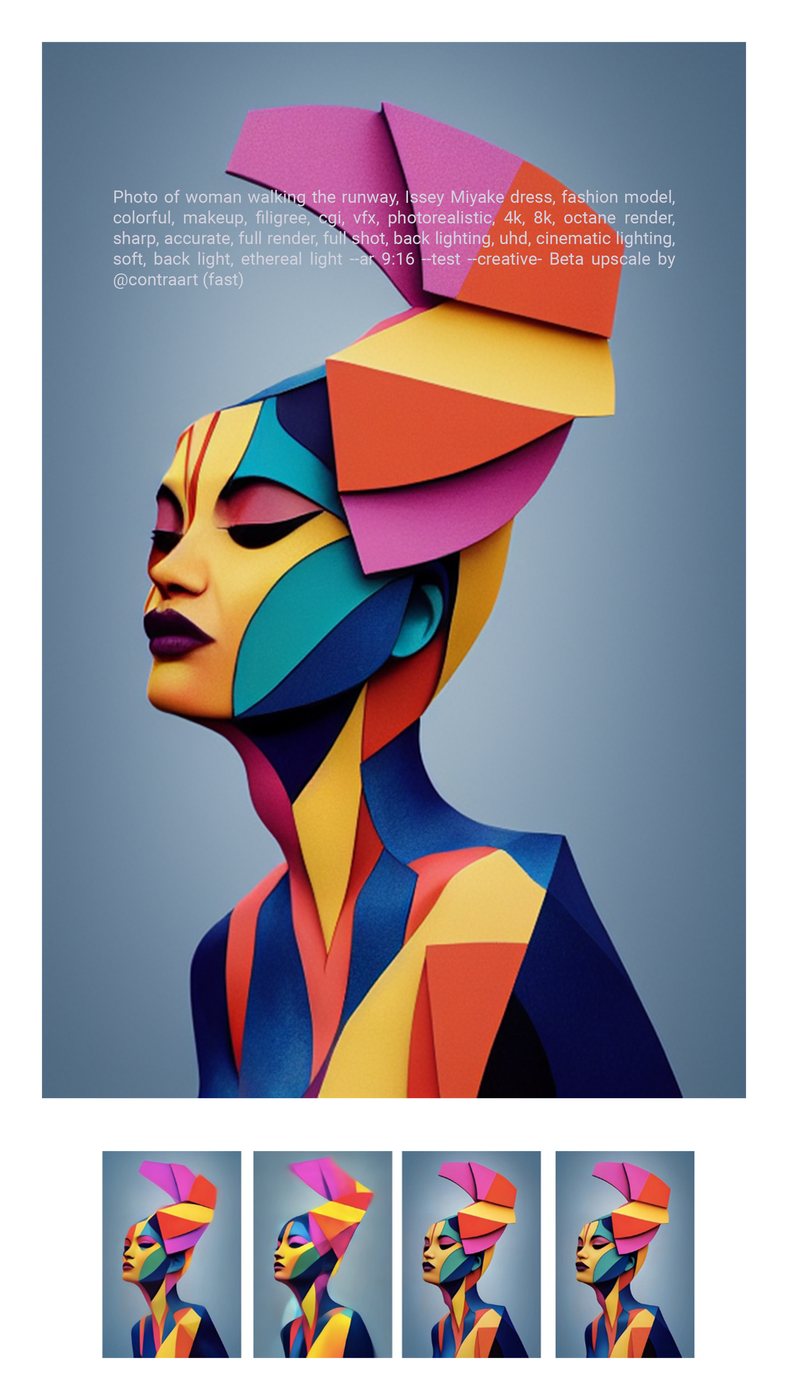
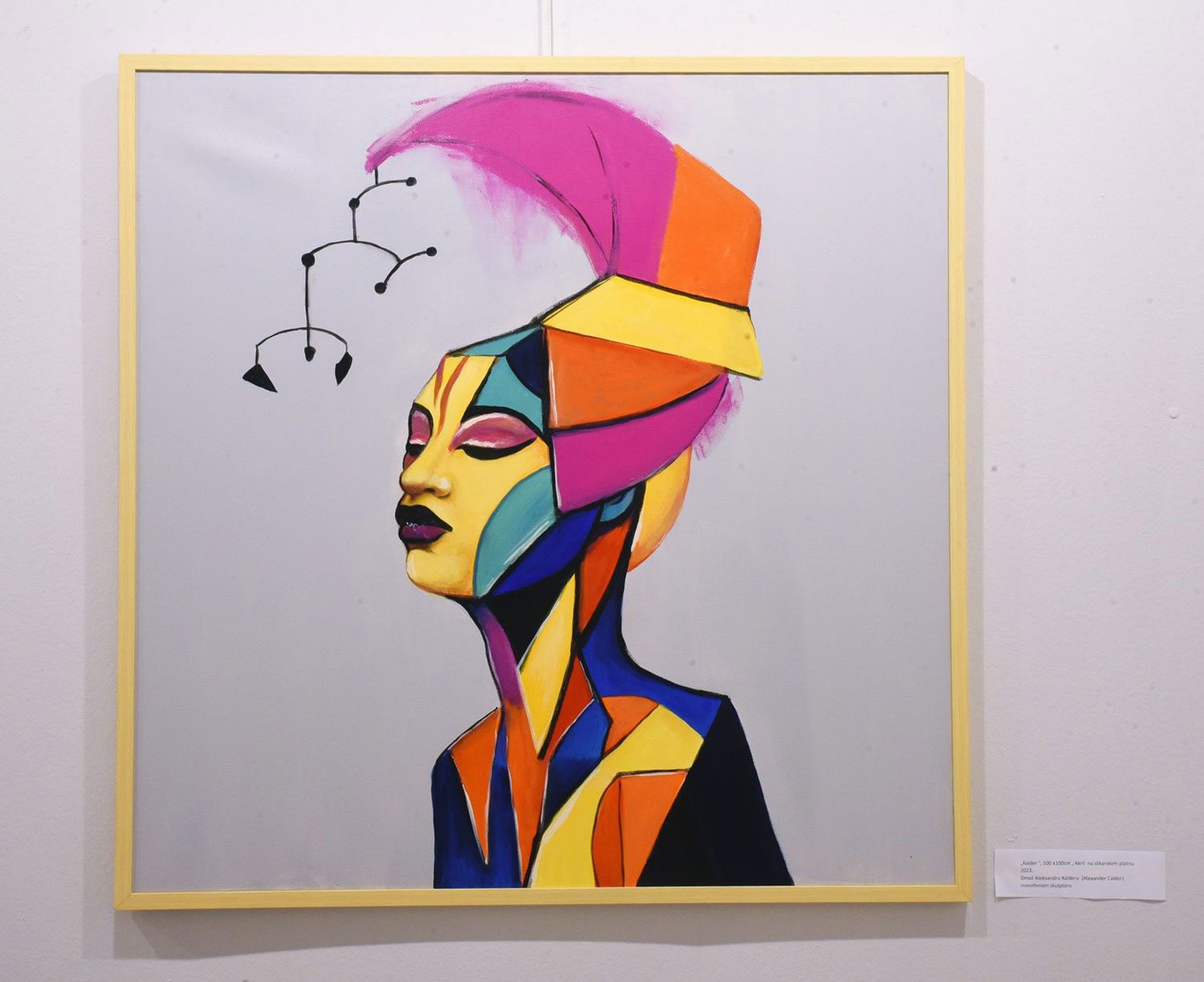
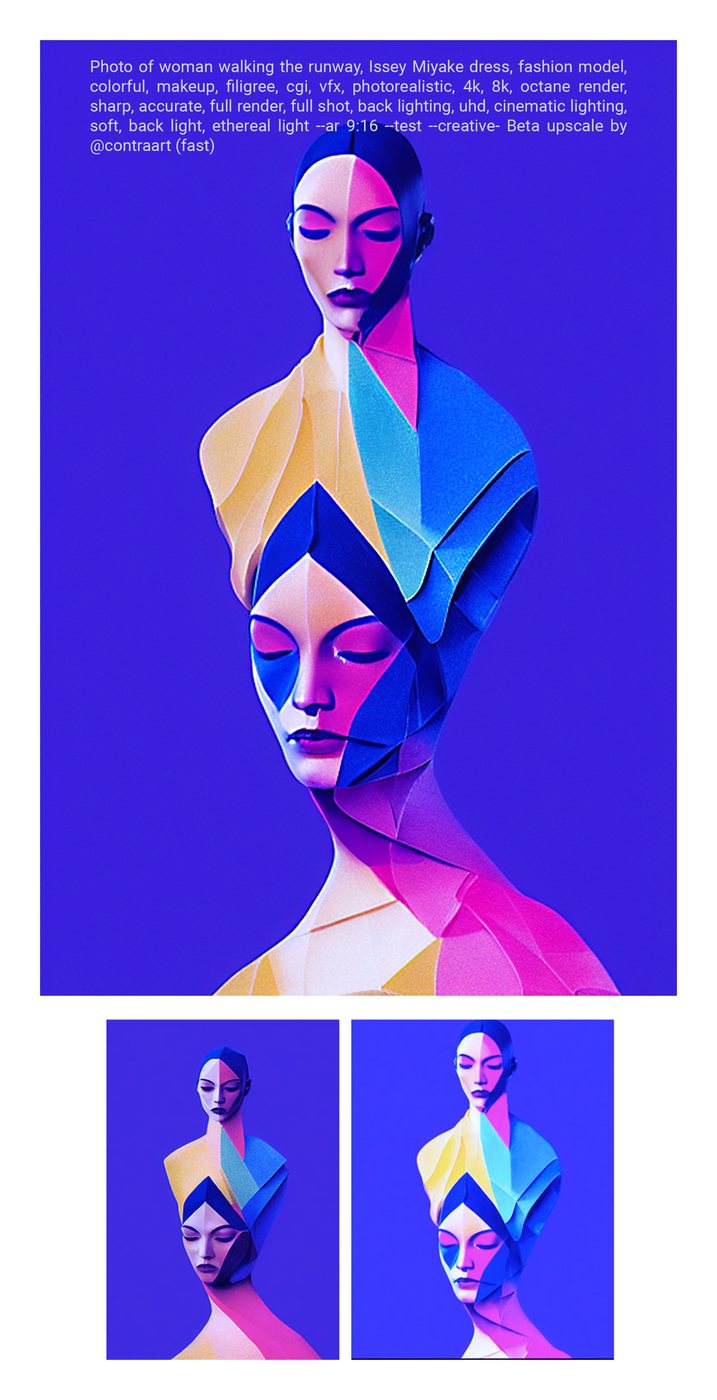
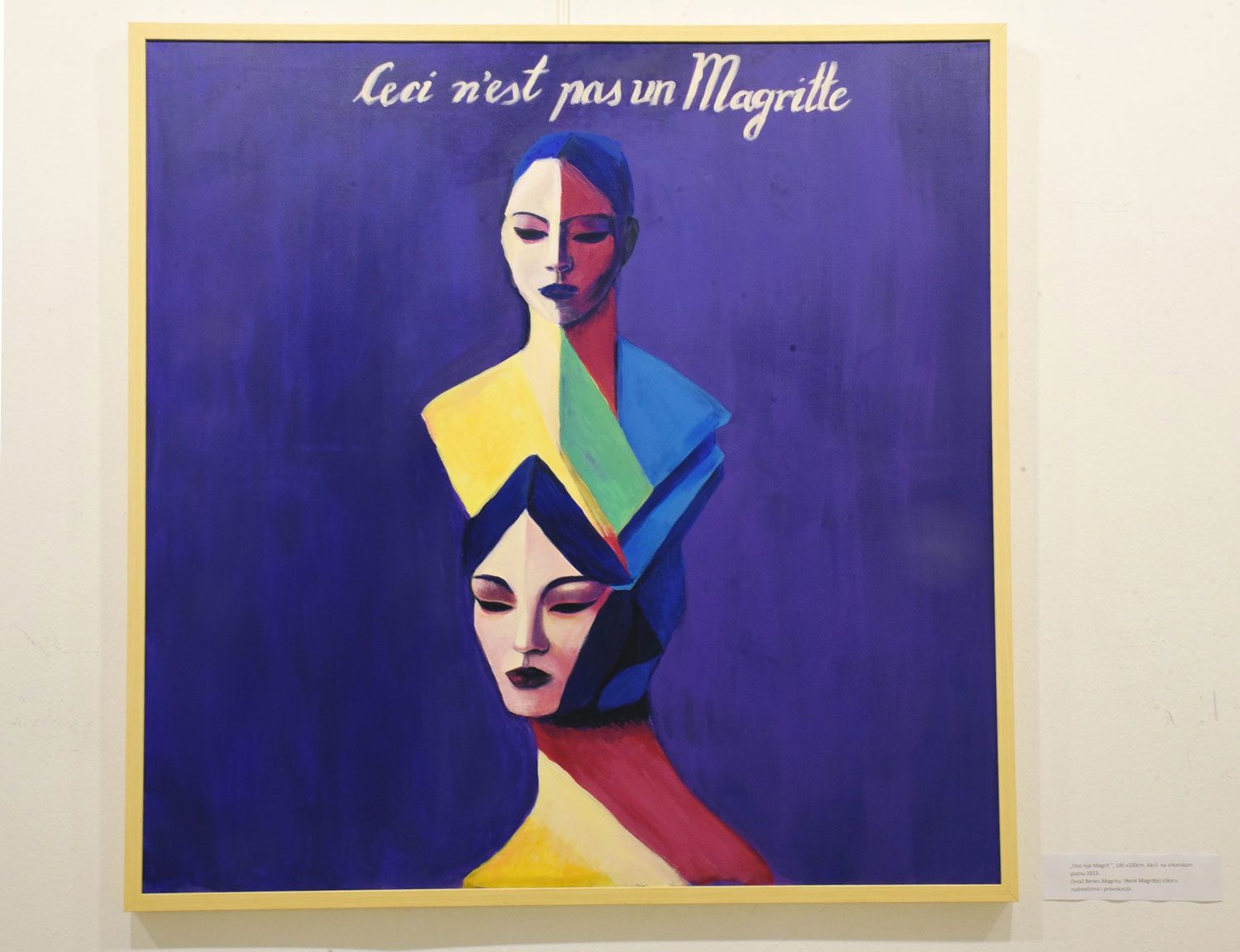
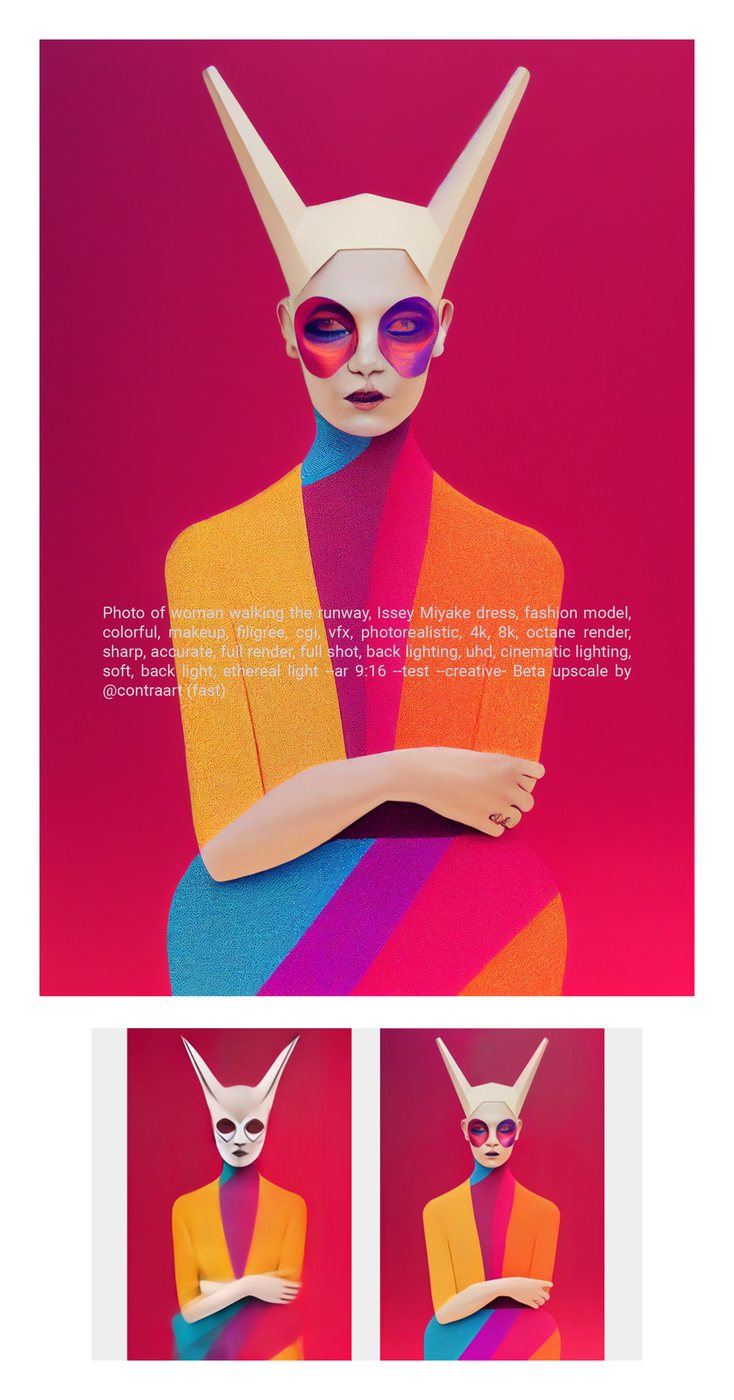
Each work is shown in three stages: the Midjourney print, the digital painting she made over it on the iPad, and the canvas in the gallery. Each carries a sign of the artist it answers: a net of lines for Nees, a mobile for Calder, a title that denies the picture for Magritte, a question and a hare’s ears for Beuys.
Digital Knitting
Digitalno pletenje
Homage to Georg Nees, one of the pioneers of computer graphics. Over the face from Midjourney she drew a net of lines on the iPad, as if the machine’s image were being knitted back together.
Calder
Kalder
Homage to Alexander Calder. Midjourney returned a head built from flat coloured planes; on the iPad she hung a small black mobile in the air beside it.
This Is Not a Magritte
Ovo nije Magrit
Homage to René Magritte. The machine stacked one face on top of another; she reworked the image on the iPad, and the painting carries its own denial across the top, Ceci n’est pas un Magritte.
Please Explain This
Molim te, objasni ovo
Homage to Joseph Beuys, the performance artist who explained pictures to a dead hare. Midjourney gave the figure a mask with hare’s ears; on the iPad she wrote the question beside it, and now the viewer has to do the explaining.
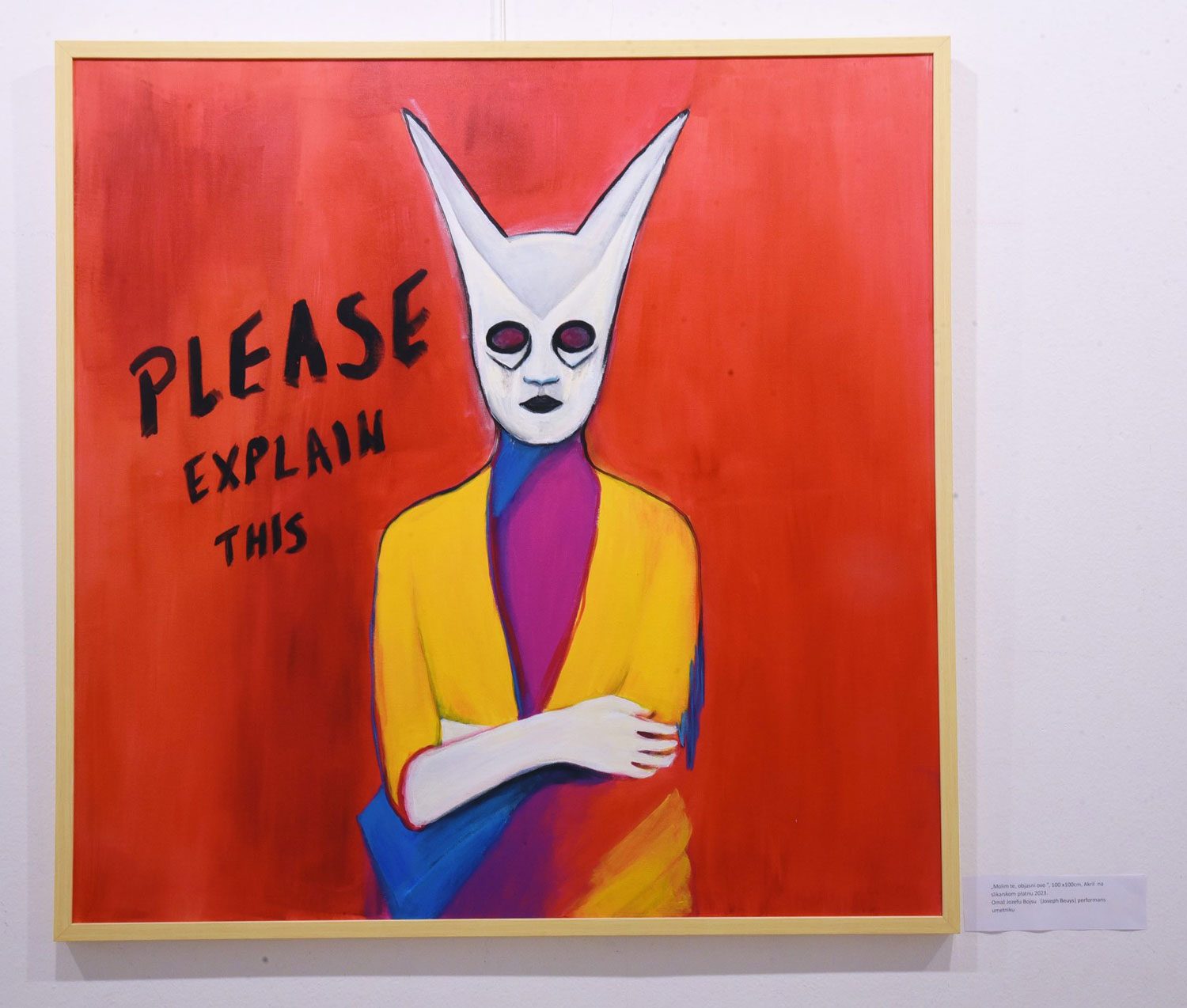
Gallery photographs of the canvases © KC “Laza Kostić” Sombor
Gallery of the Cultural Centre “Laza Kostić”, Sombor · 14 Nov – 1 Dec 2023
In the gallery
At the opening Vesna Paštrović, then director of the Cultural Centre, introduced the exhibition to a full room.
Opening · 8 photographs
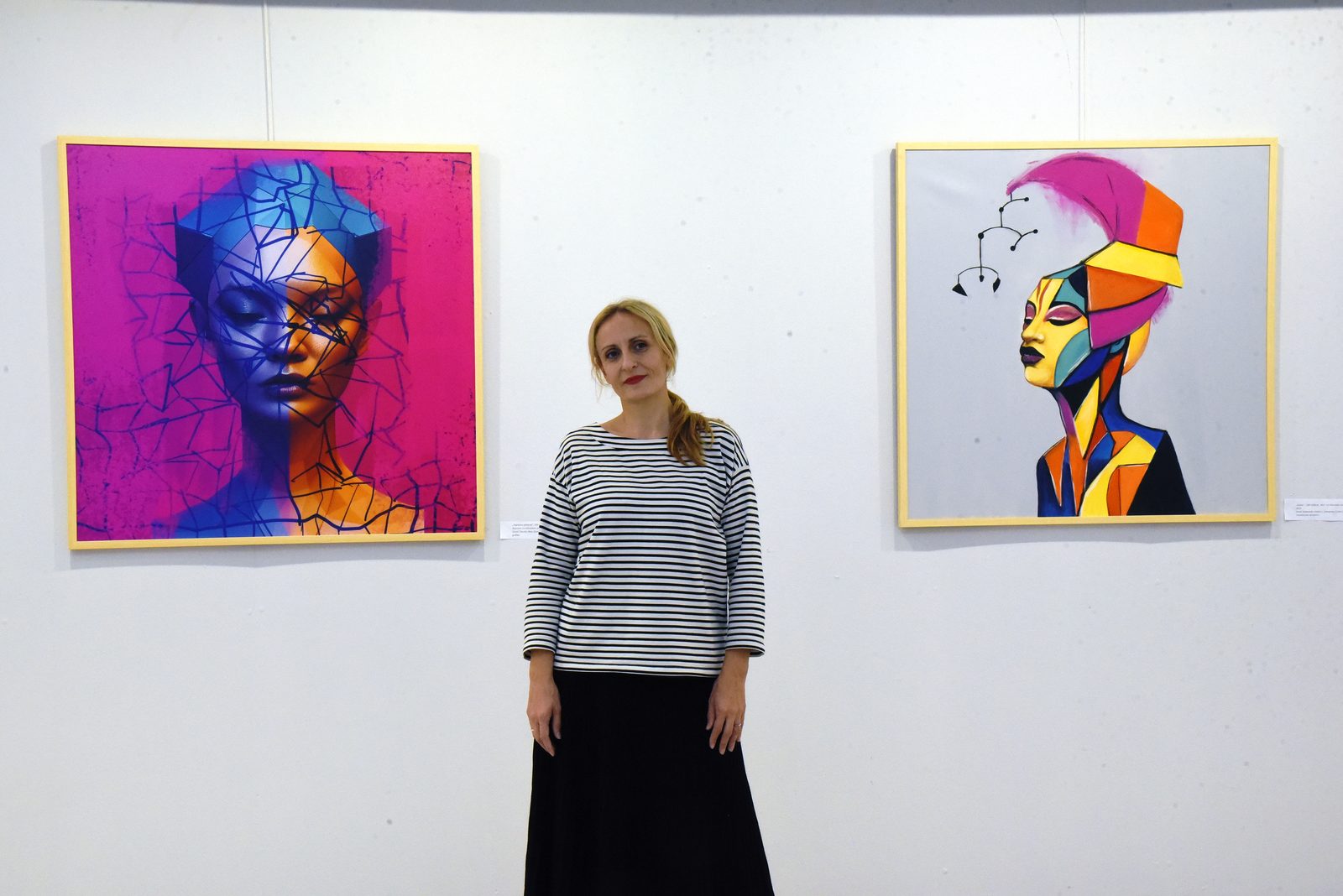
Between Digital Knitting and Calder
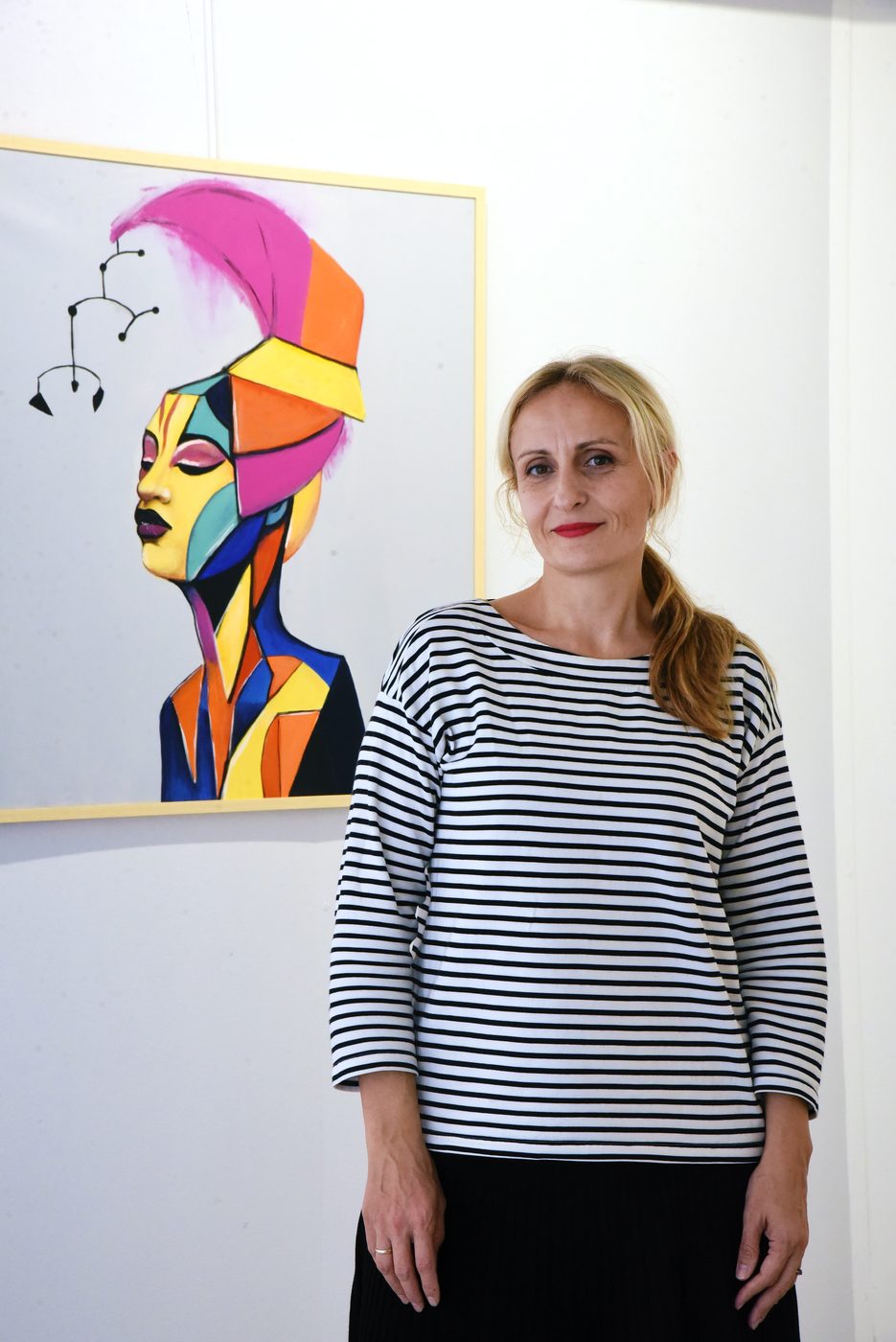
With Calder
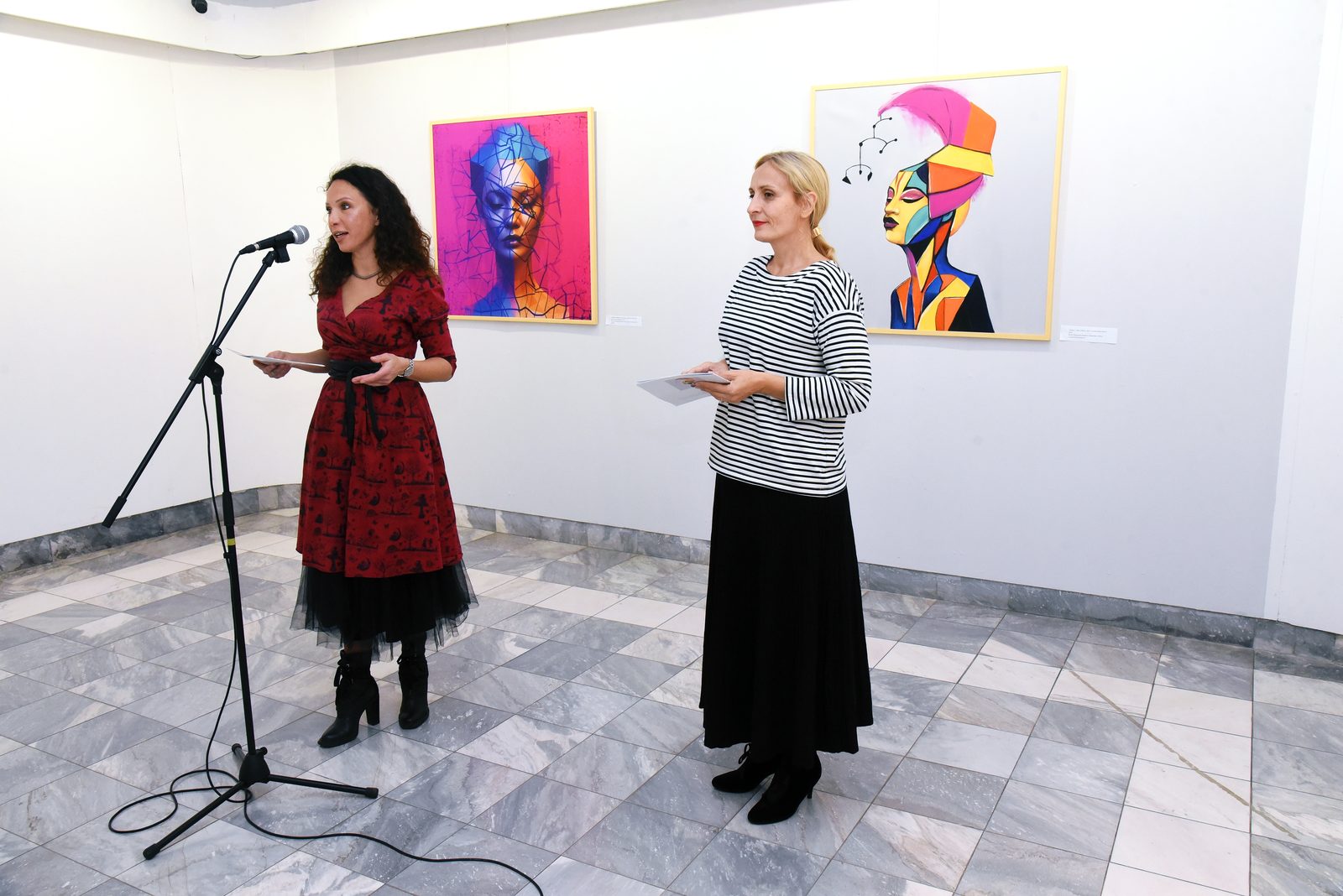
Vesna Paštrović, then director of KC “Laza Kostić”, opens the exhibition · 14 November 2023
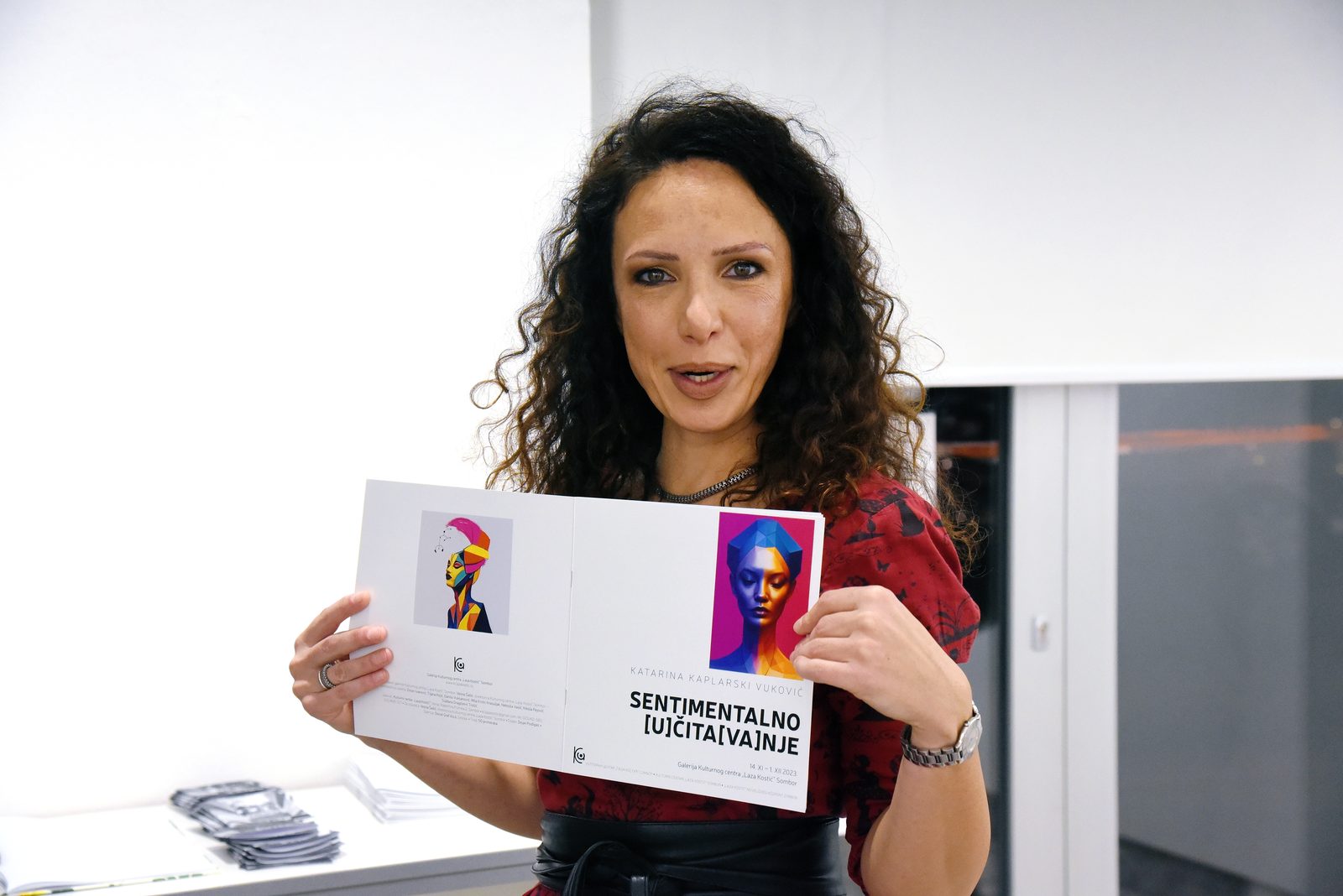
Vesna Paštrović presenting the catalogue
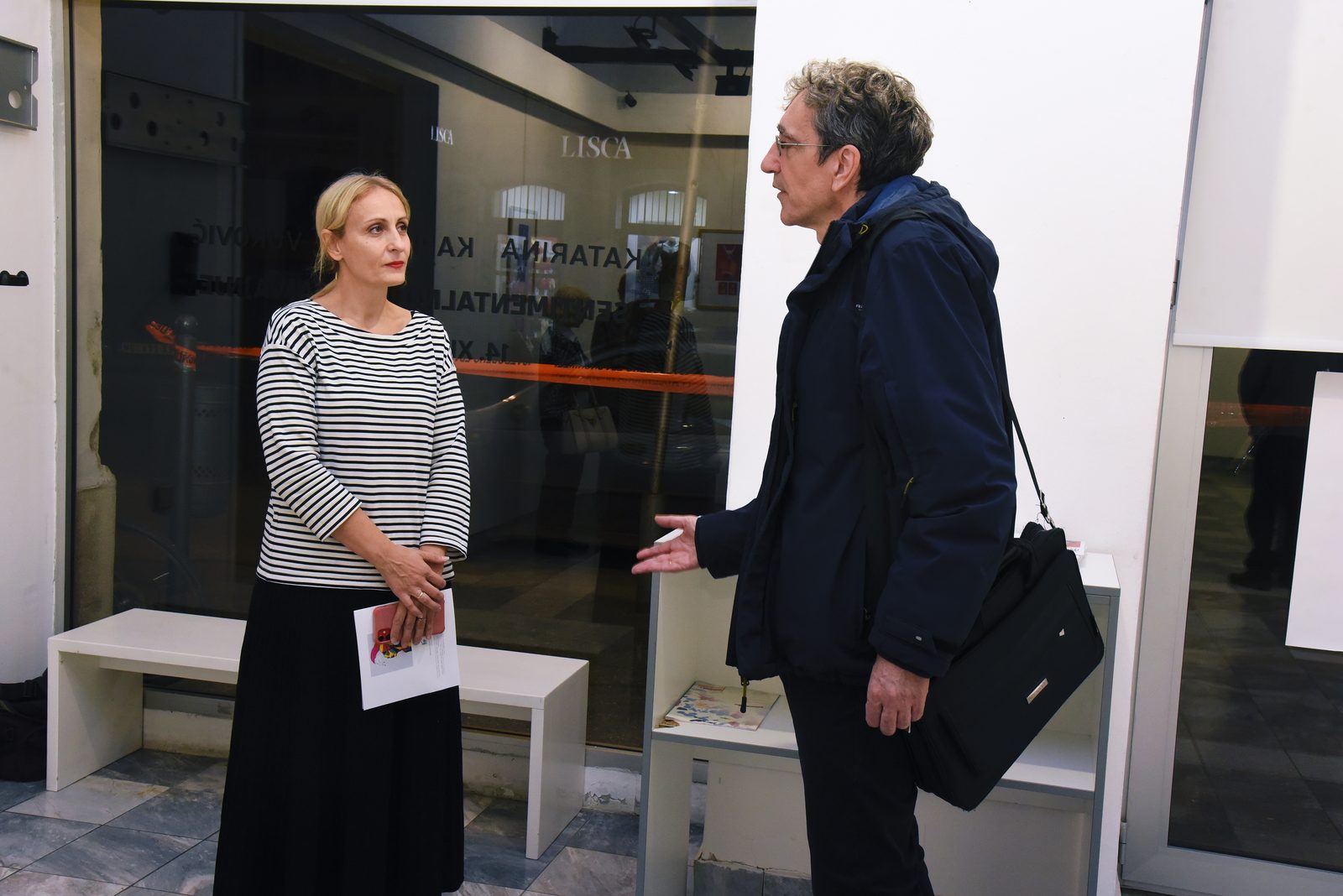
With art historian and curator Čedomir Janičić
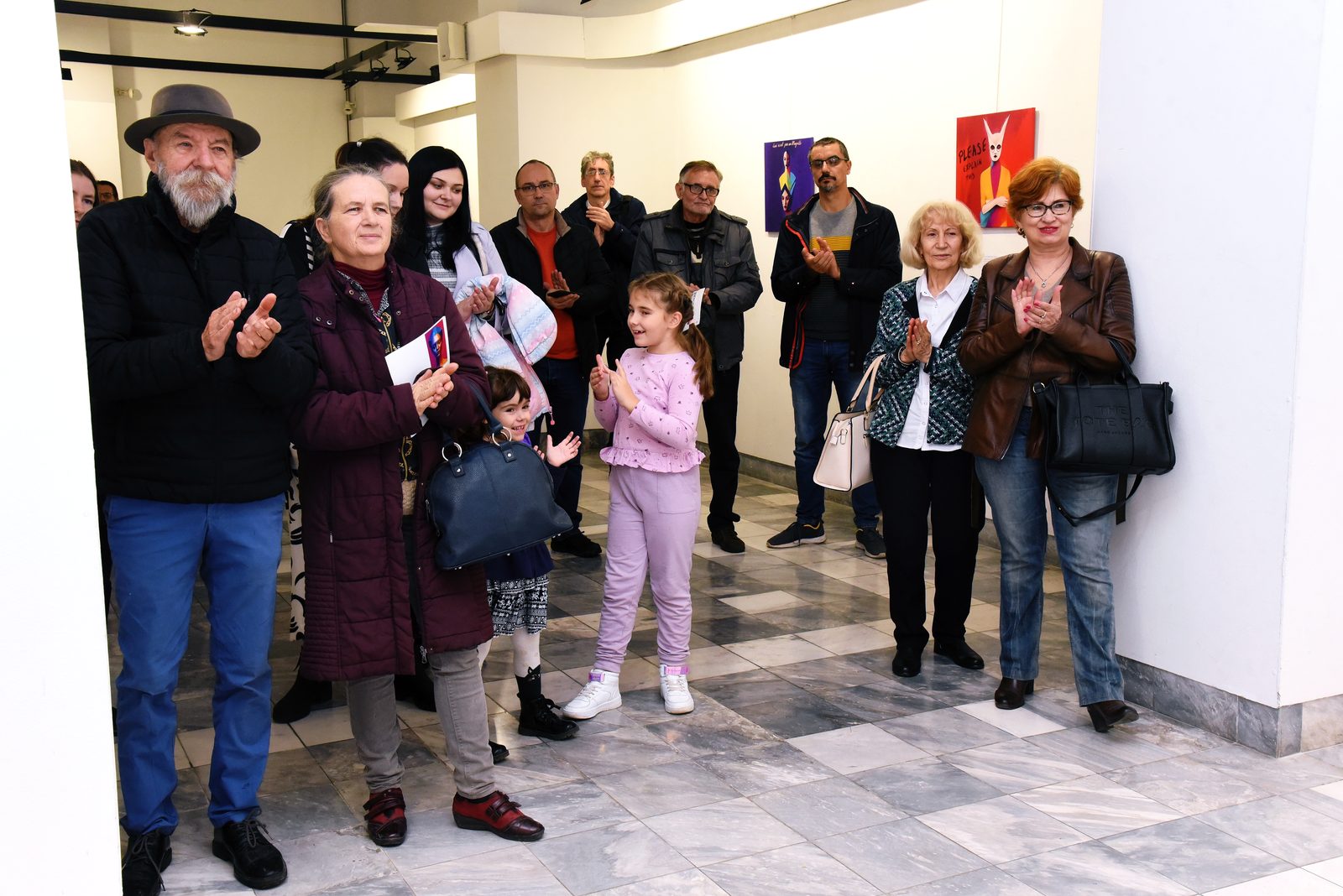
Guests at the opening
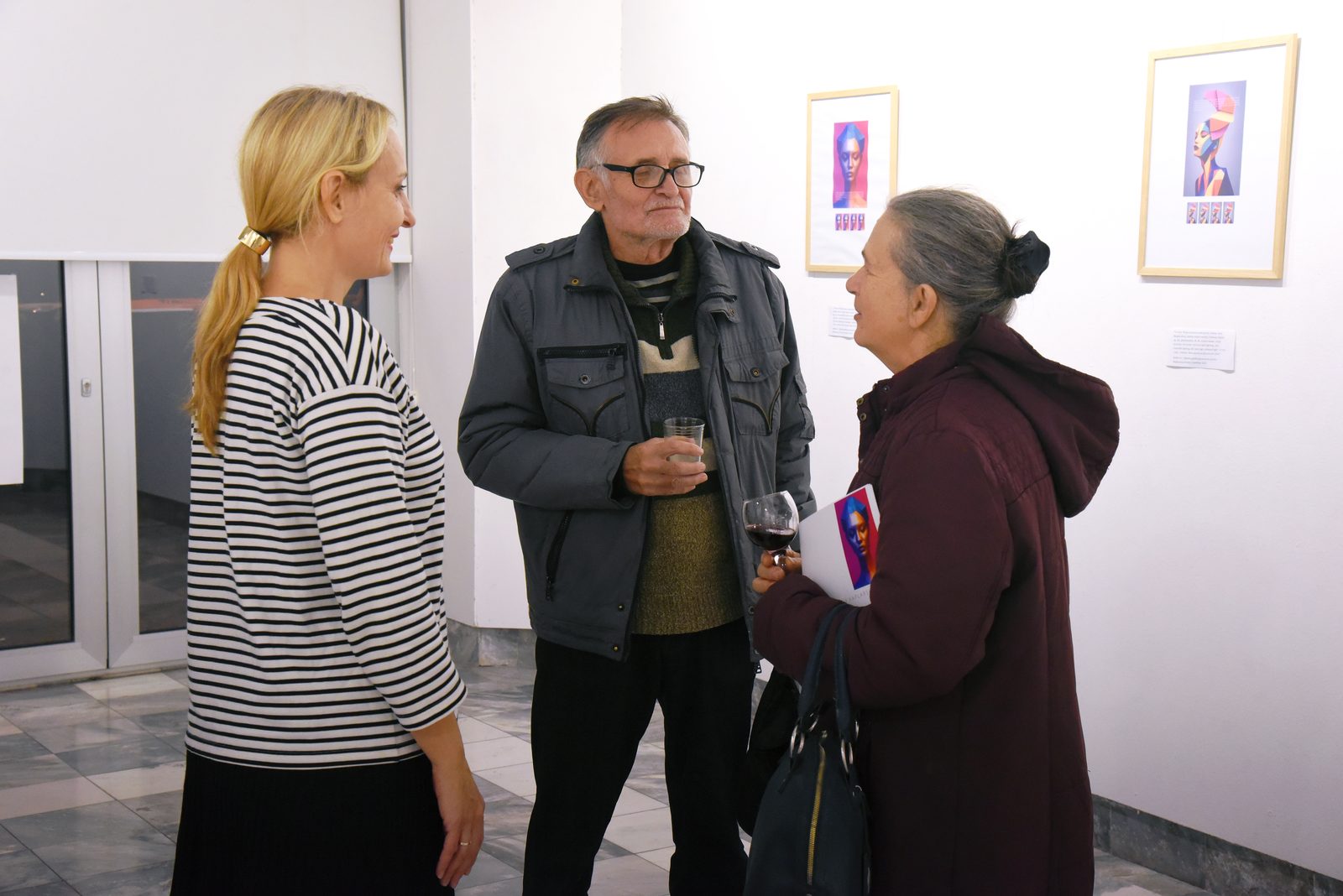
Conversation in the gallery
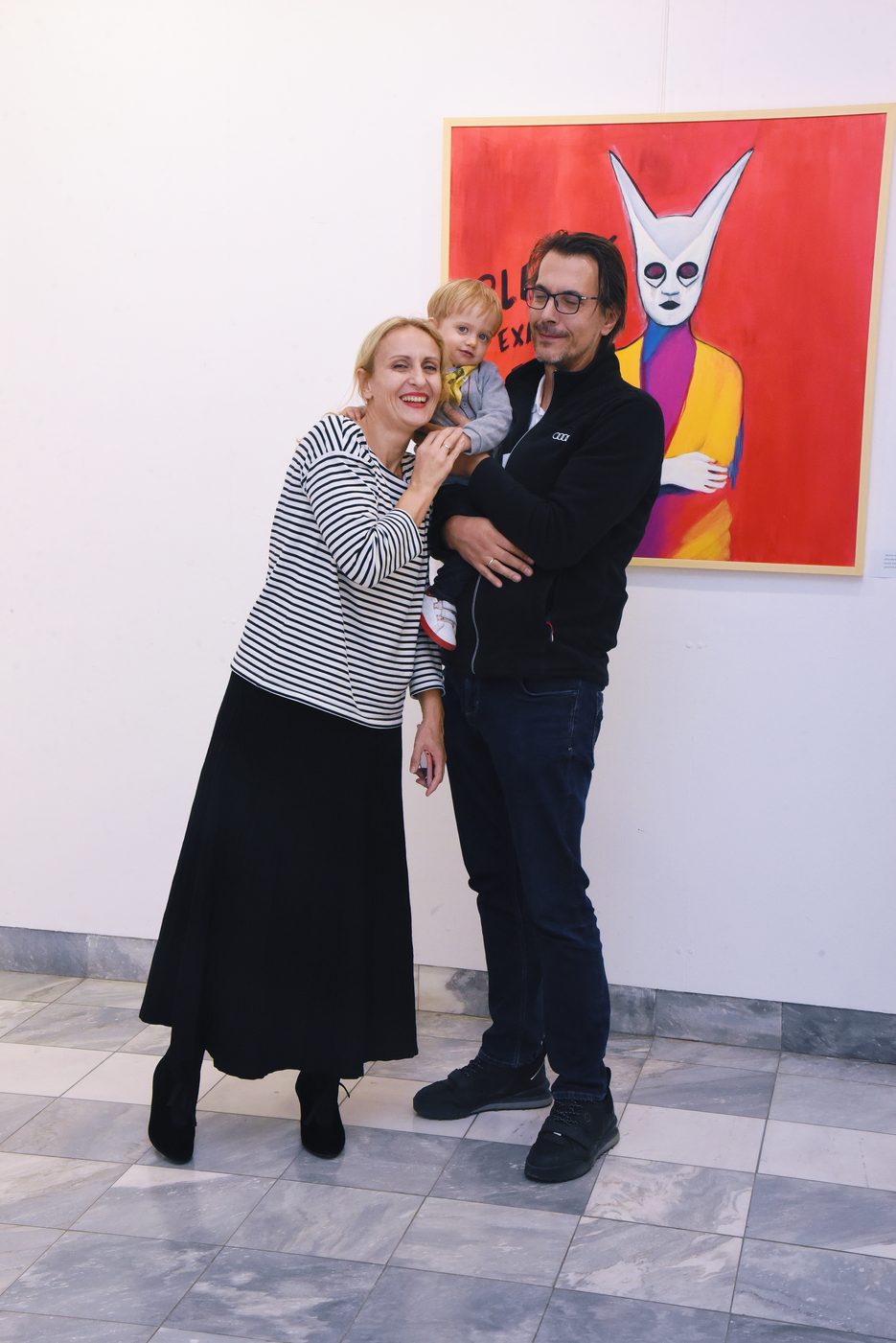
Katarina with her husband and son
Photographs © KC “Laza Kostić” Sombor
VR workshop · virtual exhibition · 2023
VR gallery workshop
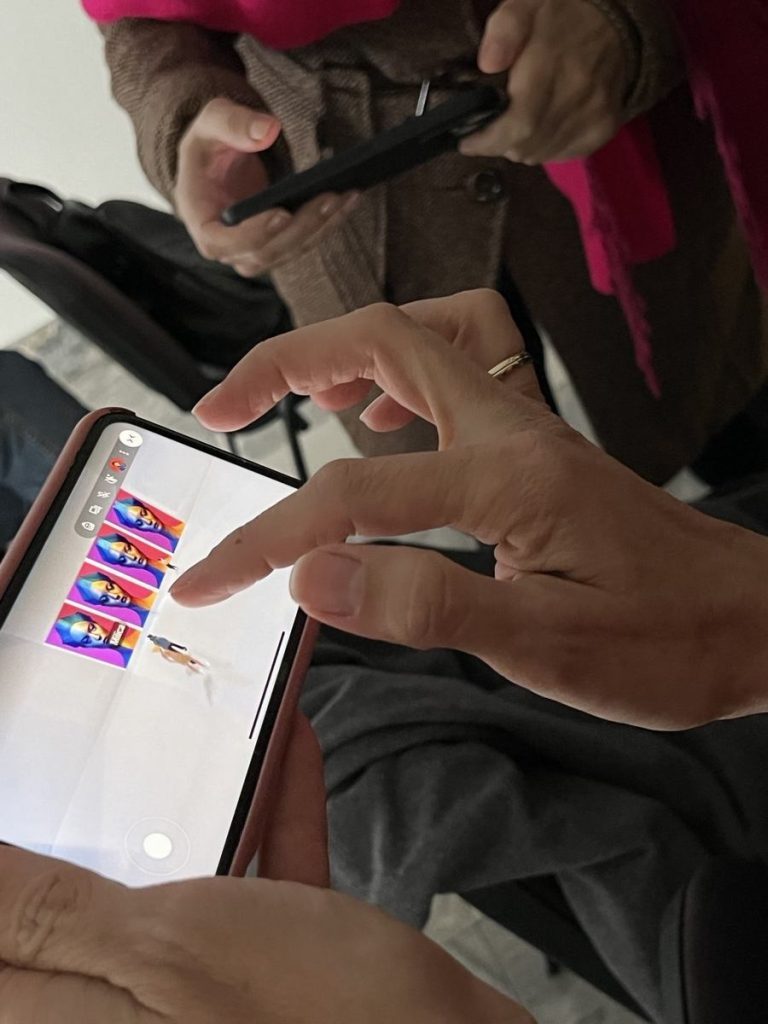
In a workshop in the same art gallery, she showed how the exhibition lives in virtual space. Participants put on the headset or opened the virtual gallery on their phones, walked through it as avatars and found the same faces hanging on its walls.
Virtual gallery and VR workshop · 10 photographs
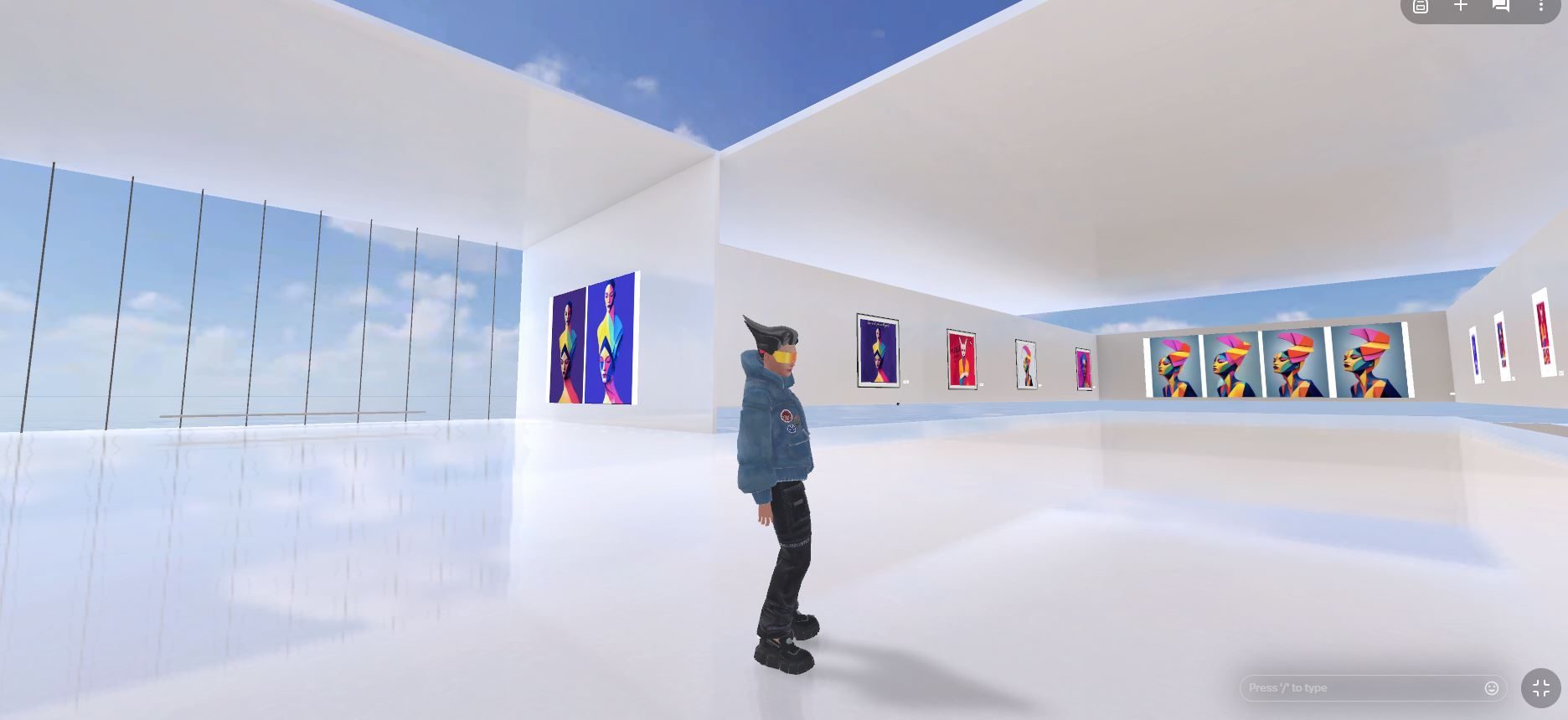
The exhibition in the virtual gallery
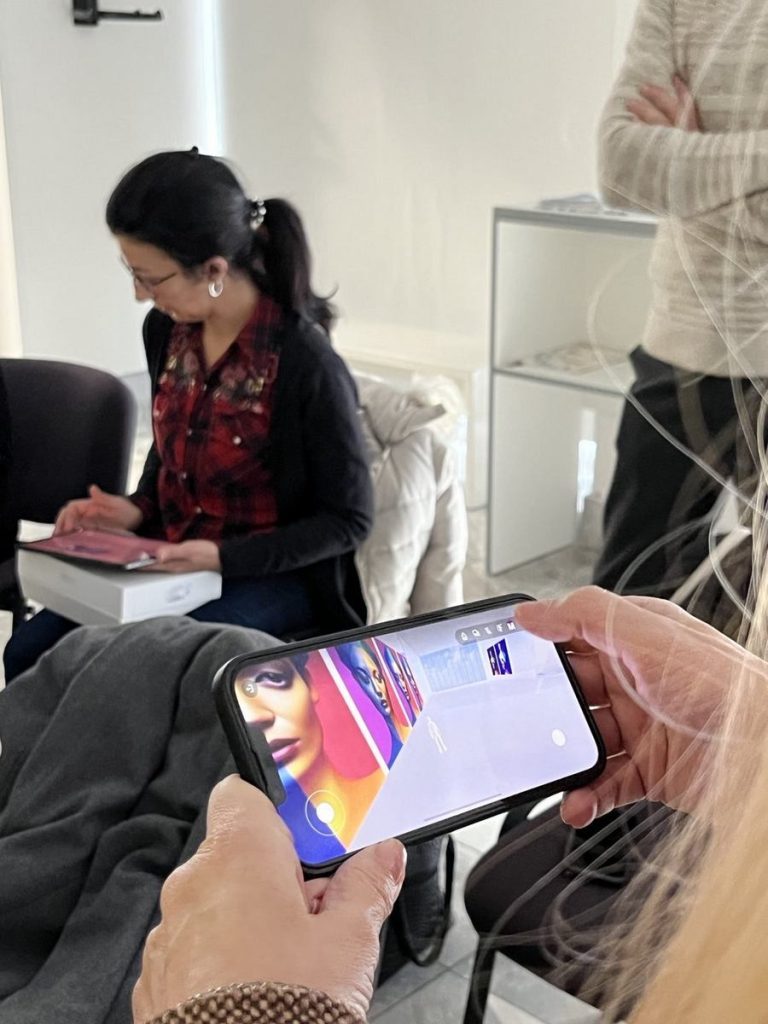
The virtual gallery on a phone
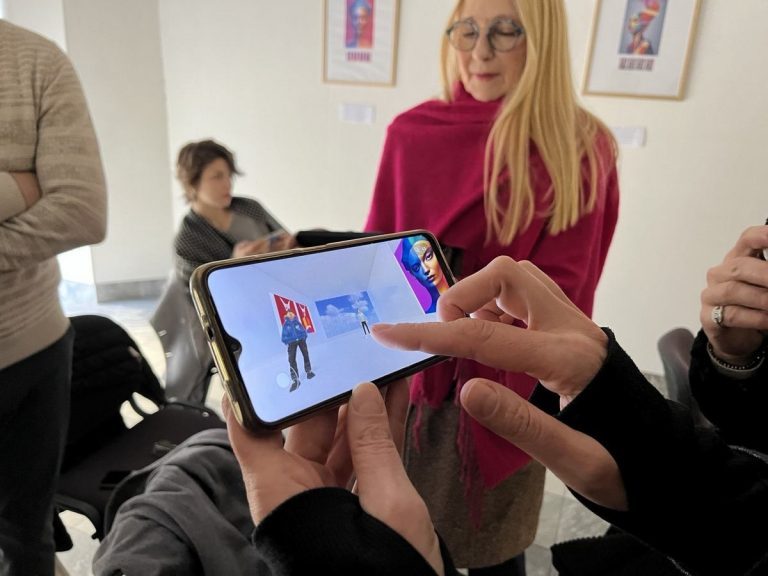
An avatar among the works
Moving through the space
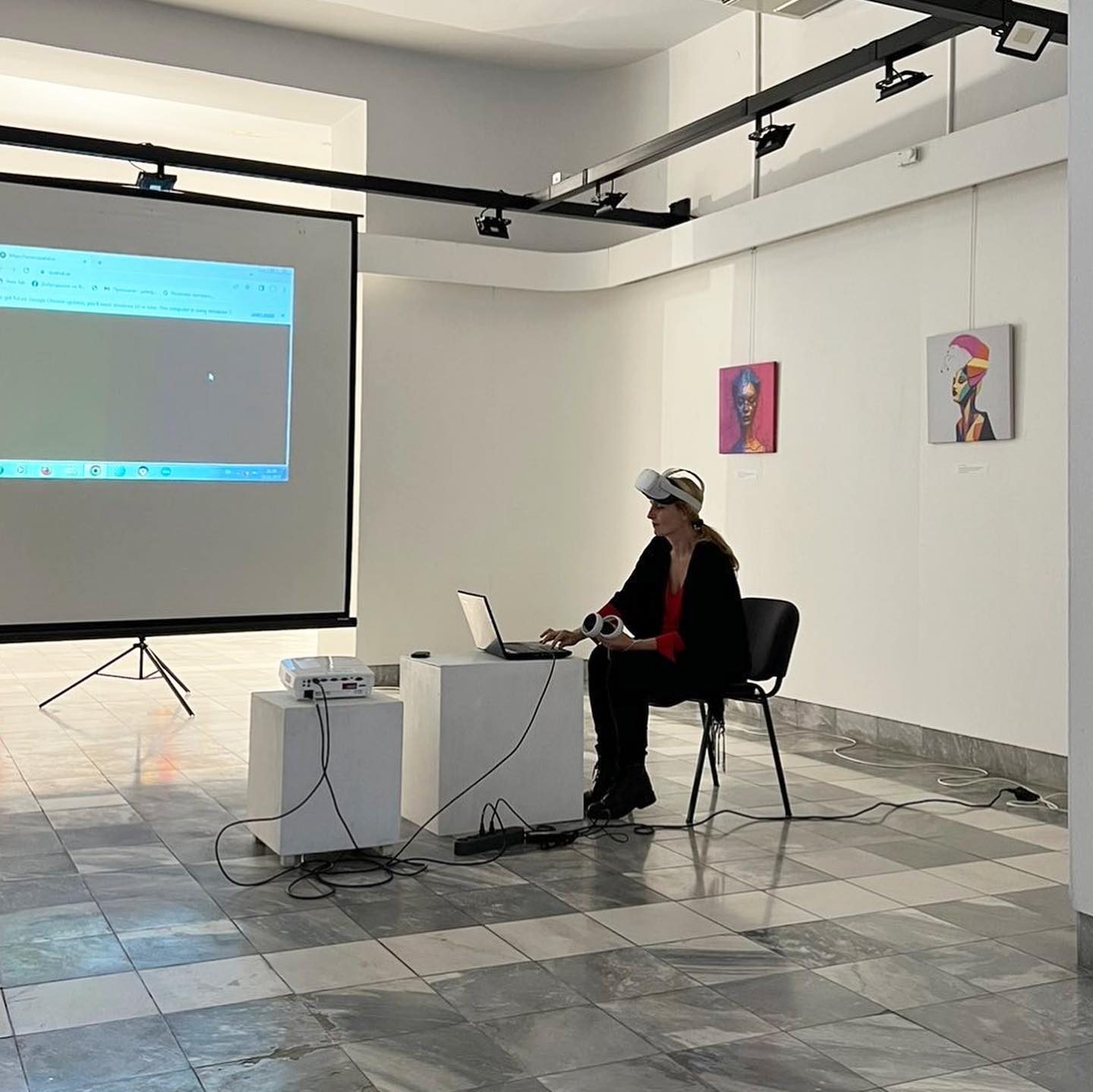
Leading the workshop in VR
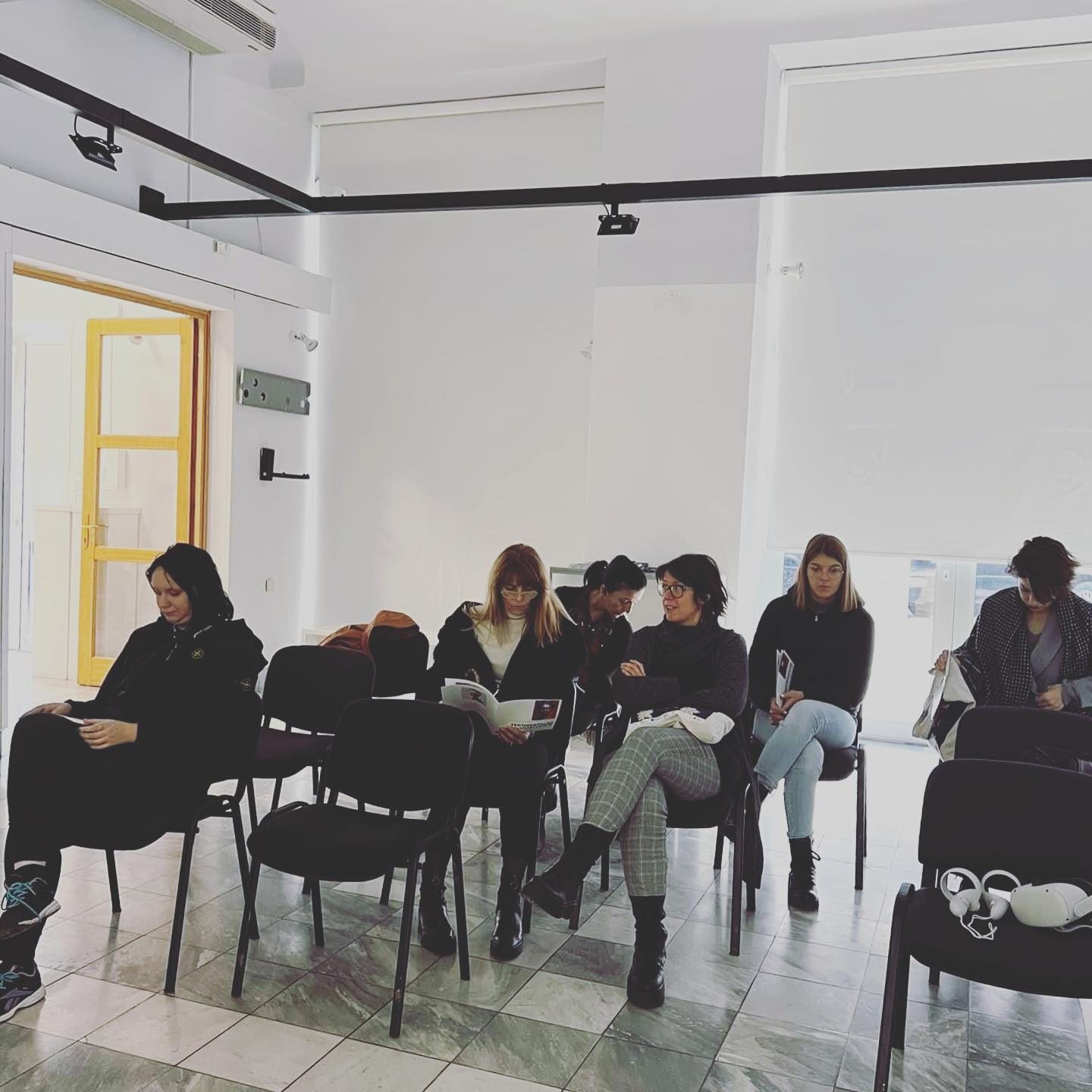
Participants
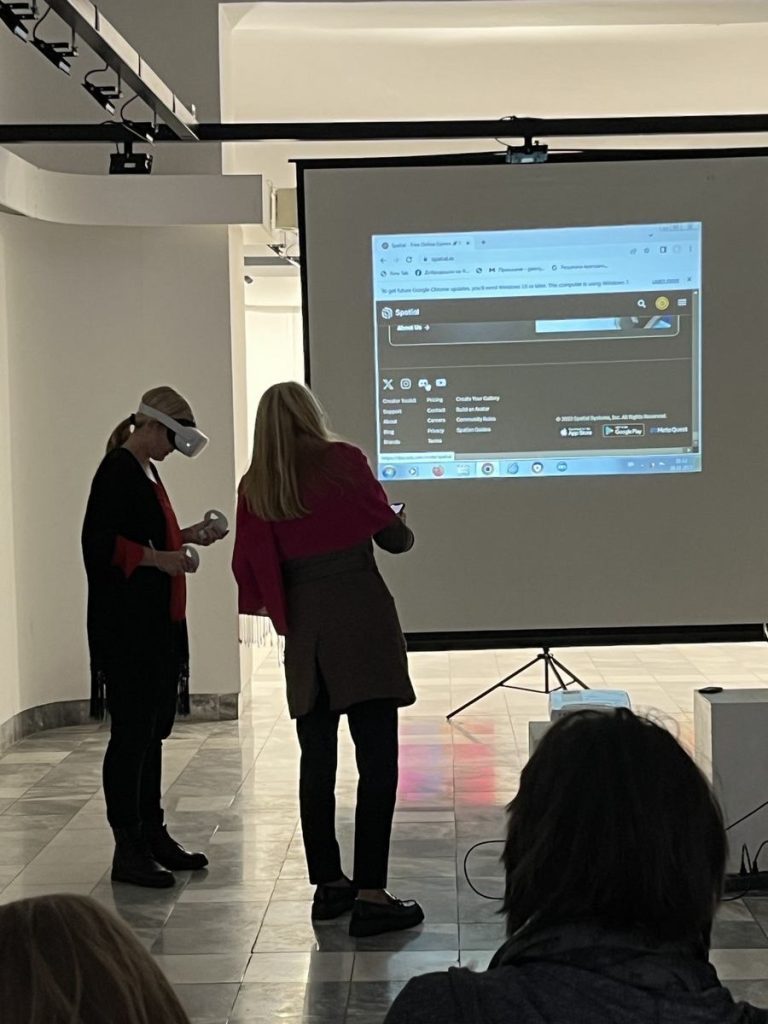
Headset on
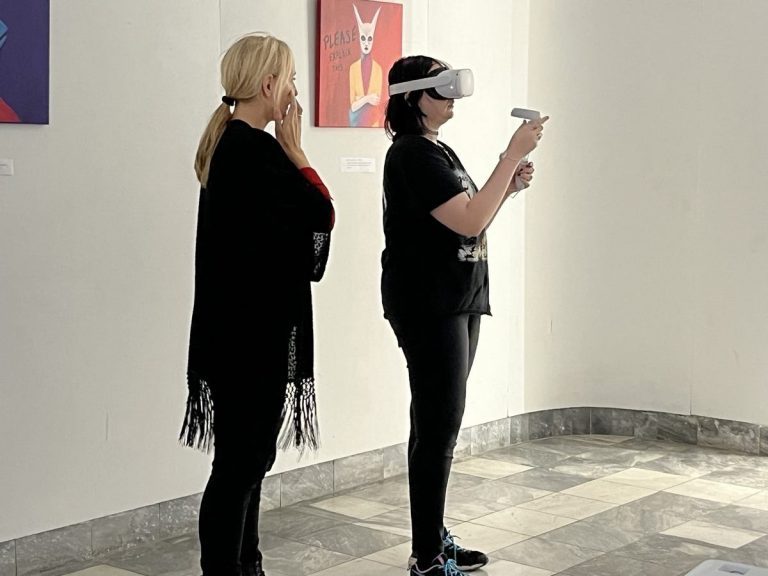
A participant in VR
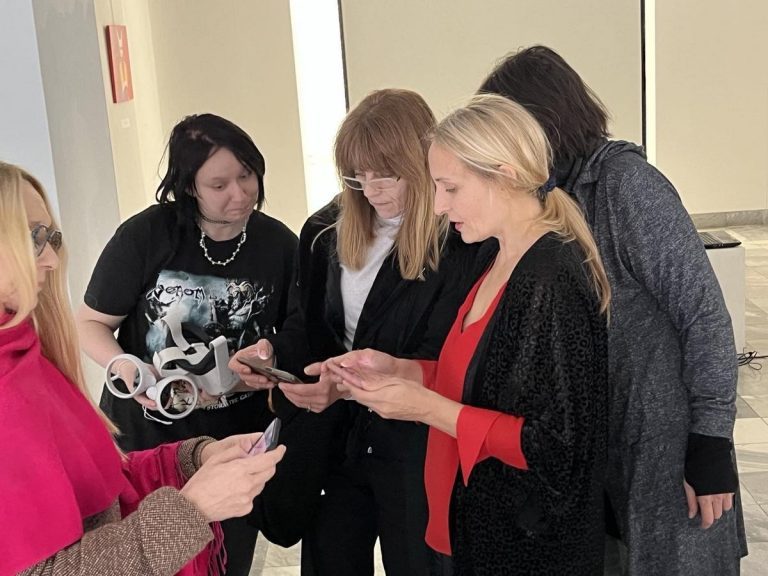
Walking the gallery on phones
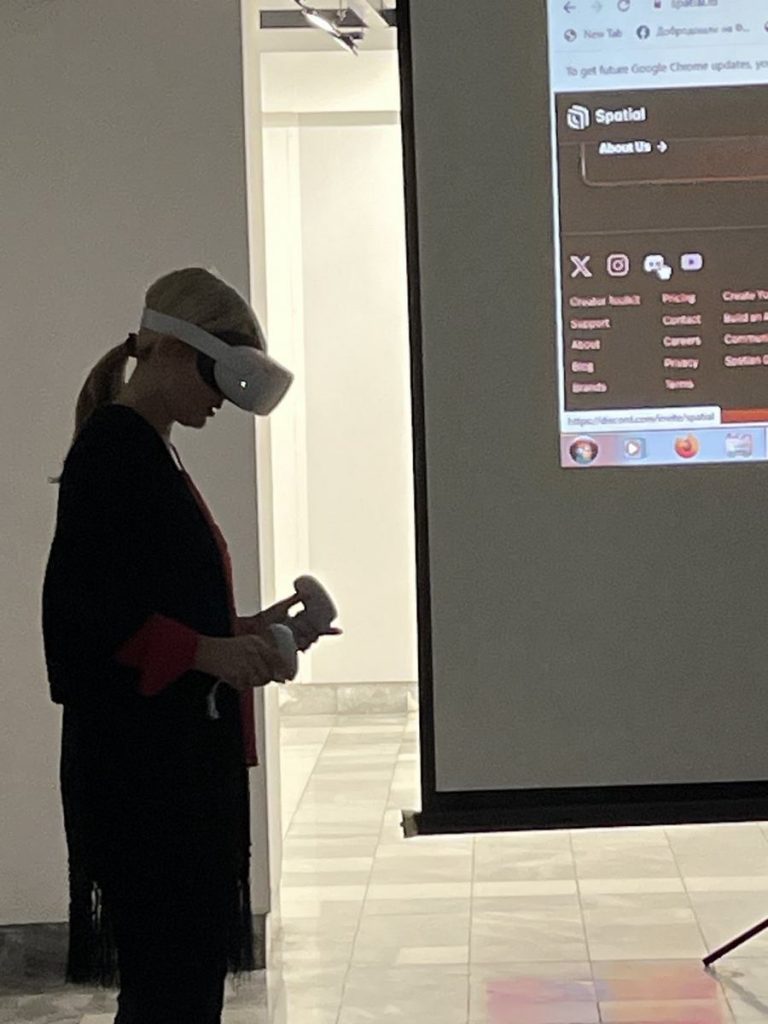
In the headset
Photographs © KC “Laza Kostić” Sombor
From the catalogue · Maja Ćirić, independent curator and art critic
Transgression as the lasting value of art
Art history has accustomed audiences to a conventional interpretive and ideological framework, in which entering the space of art means looking for a unique authorial signature. The credit for making a work of art is given, without question, to the artist.
Read the full textClose the text
Yet if authenticity is the main lever of neoliberalism, then to live through that authenticity is, in fact, to live under a certain terror of it.1 The latest technological achievements have brought forth another wave of art founded on collaboration with the computer.2 Artistic freedom of action, one possible sentimental and individual approach to reality, is only seemingly limited by artificial intelligence, in a world ruled by information, to the tools3 and the data available to it and processed by it. What was once the concept of a work of art is now a text prompt from which a digital image is generated. The new collaboration between artist and material is today a dynamic relationship between the artist and a machine trained on data, which may, but need not, later take on a material form. Such a change asks the audience to widen the lens through which it understands and judges a work of art, and at the same time it opens new possibilities for making a difference, and for understanding the exhibition as an event that points to this collaboration. If today’s art is based on data, artistic practice becomes a practice of naming and of choosing among the effects of processing that data. The character of such art depends, in relative measure, on the character of the datasets on which the machine was trained.
Katarina Kaplarski’s exhibition Sentimental (up)Load is the effect of a sociotechnological collaboration that calls for a holistic analysis. Kaplarski uses the new possibilities transparently, presenting the results of her collaboration with the Midjourney4 bot. The first group consists of works the Midjourney bot generated from the following text command: photo of woman walking the runway, Issey Miyake dress, fashion model, colorful, makeup, filigree, cgi, vfx, photorealistic, 4k, 8k, octane render, sharp, accurate, full render, full shot, back lighting, uhd, cinematic lighting, soft, back light, ethereal light --ar 9:16 --test --creative. The second group is made up of acrylic paintings of those results, combined with Katarina’s sentimental (up)loads. They speak of her bond with the historical line of art, of the learned humane gaze. The references from the general history of art that Kaplarski chose to paint into the visual result generated by the Midjourney bot are carefully selected and only seemingly unrelated: Alexander Calder’s mobiles, hanging structures that move with the flow of air and that revolutionised sculpture; René Magritte’s painting Head with a Female Torso (1941); Joseph Beuys’s performance How to Explain Pictures to a Dead Hare (1965); and K27 – Knitting – Central Perturbations by Georg Nees, a pioneer of computer art and generative graphics. What binds these references together is an expanded definition of art as a common denominator, a dynamic transgression of concept and form, which leads on to the transgressions that belong today to art made with artificial intelligence. That shift of form and concept is, in Calder, dynamic sculpture; in Magritte, dynamic interpretation; in Beuys, performativity; and in Nees, a computer experiment grounded in research.
With Kaplarski, the combination of references from art history and an (ephemeral) result of the digital order becomes a post-fact in the world of art. She does not build her style on objective facts, that is, on the style proper to the references she names, but gives priority to an emotional narrative and a sentimental perception of reality. And yet, rather than letting post-historical5 and post-factual art disintegrate into informational dust, Kaplarski, collaborating with artificial intelligence as an equal, turns it into an exhibition as a whole, and so returns it once more to unique matter. Because she guided the choice among the algorithm’s offerings sentimentally, and then intervened in them as well, Kaplarski achieved an artistic personalisation. In doing so she challenges sentiment analysis6 as a normative tool of artificial intelligence, and confirms once again that the transgression of norms is the lasting value of art.
Maja ĆirićIndependent curator and art critic
- Byung-Chul Han, Infocracy: Digitization and the Crisis of Democracy, 2022.
- The first examples of computer, pre-digital art date from the 1950s.
- Sentiment Analysis is a tool of the Python programming language for analysing the emotional tone of text data.
- Midjourney is an artificial intelligence program and front-end service for generating digital images.
- In the sense that the paradigm of history has been surpassed, in a time that brings different histories onto the same plane.
- Ibid., note 3.
Translated from Serbian